WWDC26 Is Making the App Store More Visual
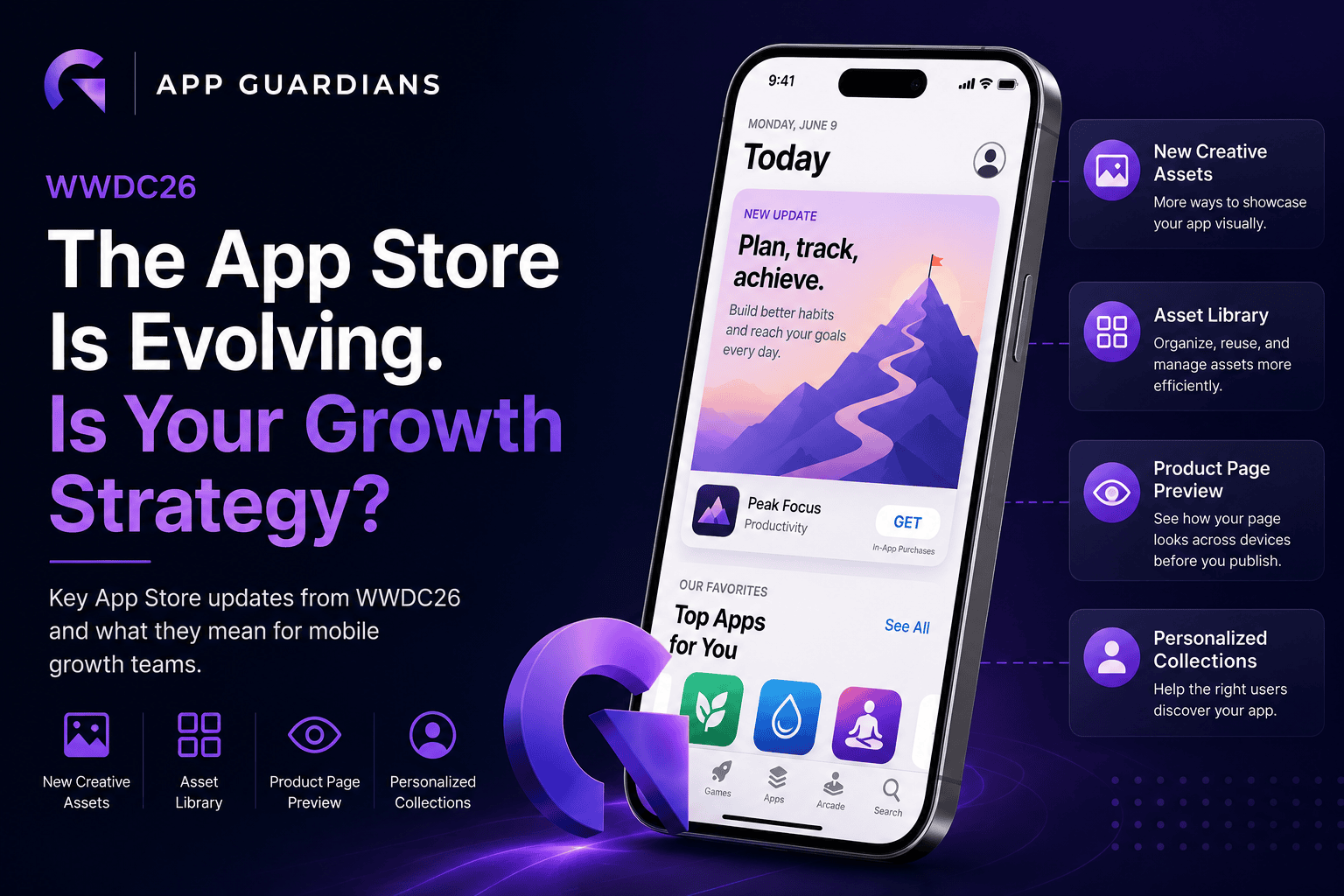
Summary of what WWDC26 Update Means for Mobile Growth Teams
WWDC is often viewed as an event for developers, but every year there are announcements that have a direct impact on marketers, product managers, and growth teams.
This year is no different.
While many headlines focused on iOS updates and Apple Intelligence, one of the biggest takeaways for app publishers is how Apple continues to evolve the App Store into a richer, more visual discovery platform.
For teams responsible for growing installs, improving conversion rates, and increasing subscription revenue, these updates deserve attention.
Here’s what stood out to us — and what we’d recommend doing next.
Creative Is Becoming a Bigger Growth Lever
For years, App Store Optimization was largely about metadata, screenshots, ratings, and keyword strategy.
Those fundamentals still matter, but Apple is giving developers more ways to showcase their apps visually through new creative assets and improvements in App Store Connect.
That might sound like a small change.
It isn’t.
Every new creative surface is another opportunity to influence a download decision before someone ever opens your app.
If your screenshots haven’t changed in a year, or if your App Store page doesn’t reflect your latest marketing campaigns, this is a good reminder that your store listing should evolve just as often as your paid advertising does.
Our perspective: The best-performing app teams no longer treat App Store assets as something they update once or twice a year. They treat them like performance marketing creatives — constantly testing, learning, and improving.
Asset Management Just Got Easier
One announcement we found particularly interesting wasn’t flashy at all.
Apple introduced improvements that make it easier to manage creative assets inside App Store Connect.
For marketing teams, this removes a surprising amount of operational friction.
Instead of scrambling to prepare screenshots every time a campaign launches, teams can organize assets ahead of time and reuse them more efficiently across product pages and marketing initiatives.
That may not sound exciting, but anyone who has coordinated a major app update with designers, developers, and marketers knows how much time this can save.
Less time managing assets means more time improving them.
Consistency Matters More Than Ever
One trend has become increasingly clear over the past few years.
Apple continues to reward apps that provide a consistent experience from the first impression all the way through installation.
Imagine someone clicks on a paid ad promoting your AI feature.
They land on your App Store page…
…and none of the screenshots mention AI.
That disconnect creates friction.
Now imagine they land on a product page that reinforces exactly what attracted them in the first place.
The messaging matches.
The visuals match.
The value proposition is immediately clear.
That is the experience Apple is encouraging developers to build.
This Isn’t Just About ASO Anymore
Many teams still separate App Store Optimization from User Acquisition.
In reality, those two disciplines continue to move closer together.
Your paid campaigns influence who visits your App Store page.
Your App Store page determines whether they install.
Your onboarding determines whether they stay.
Your subscription experience determines whether they generate revenue.
It is all one growth funnel.
The strongest mobile teams don’t optimize these stages independently — they optimize the entire journey.
What We’d Recommend Doing Now
If you’re preparing your app for the second half of 2026, here are a few practical steps worth considering.
1. Review your App Store creative
Don’t ask whether your screenshots look good.
Ask whether they answer the user’s biggest question within the first few seconds.
2. Refresh creative more frequently
Seasonal campaigns, feature launches, AI capabilities, pricing updates, and major product improvements should all be reflected in your App Store presence.
If your product evolves every month, your App Store page should evolve too.
3. Align your paid campaigns with your product page
One of the simplest ways to improve conversion is ensuring that users see the same message after they click an ad as they saw before clicking it.
Consistency builds confidence.
4. Make creative testing part of your growth process
Many companies regularly A/B test advertisements but rarely revisit their App Store assets.
That mindset is changing.
As Apple introduces more creative flexibility, ongoing experimentation will become increasingly important.
Our Take
At App Guardians, we think one message came through clearly from this year’s WWDC.
Apple wants the App Store to become a richer discovery experience, where compelling visuals and relevant messaging help users find the right apps faster.
For publishers, that creates an opportunity.
The companies that continuously refine their App Store presence — not just during major launches, but throughout the year — will be better positioned to improve conversion rates and make every acquisition dollar work harder.
As competition for attention continues to grow, creative quality is no longer just a design consideration.
It is a growth strategy.
Ready to Improve Your App Store Performance?
Whether you’re launching a new app or looking to improve an existing one, our team helps mobile companies optimize every stage of the growth funnel — from App Store Optimization and creative strategy to paid user acquisition, conversion optimization, and subscription growth.
Want a second opinion on your App Store presence? We’d be happy to help.

Related Articles

Most mobile app teams spend countless hours designing onboarding flows, improving paywalls, and building new features. Far fewer [...]
-
Launching a mobile app today requires much more than building a great product and turning on paid ads. [...]
-
If you've spent any time researching mobile app marketing, you've probably come across the terms SKAN or SKAdNetwork. [...]